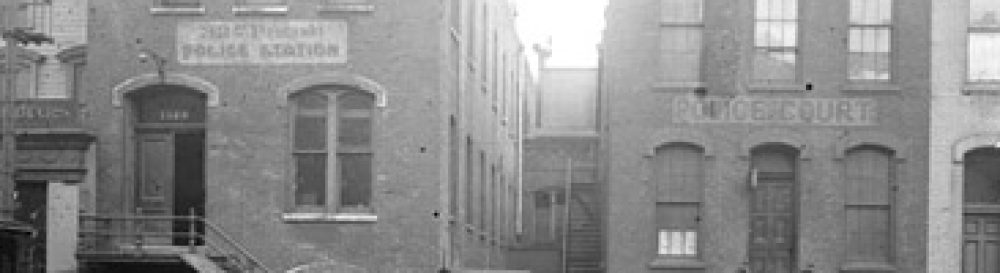
Recent events have promoted essays, like this, that worry policing is less effective than in the past. Yet there were problems before—coerced confessions and prejudice played significant roles—and its important not to lose sight of that historical reality as we work through our responses to the present.
Police torture, 1919
Claims that police in Chicago tortured suspects date back to at least 1919. That year, Charles Johnson, one of two Black teens charged with a murder during the riot, testified he was threatened and hit until he confessed to the crime. Walter Colvin, the teen tried with Johnson, added that he was beaten while in custody, too.
The jury and judge disregarded their claims. The Illinois Supreme Court said that if their testimony was true it was ’a gross outrage,’ and their confessions should be thrown out. But that court didn’t believe them either.
The day the grand jury went on strike
On Wednesday, August 6, 1919, as the National Guard still patrolled Chicago, the grand jury hearing riot cases went on strike. In the middle of a presentation, one of the jurors interrupted Assistant State’s Attorney Robert Rollo, demanding to know if there were any cases on the docket that did not involve Black suspects.
For more on this story (and the history of the fight for Black rights in Chicago’s first century), go here.
Separate
As racist violence unfolded in Chicago in July and August 1919, white politicians and local papers increasingly suggested segregating Black residents from white was not just a solution, but the best solution. Some called for laws; even after the riots ended, others suggested that informal arrangements — even agreements — would work as well. As the Chicago Tribune put it in November 1919: ”There can be no living together, so why not live apart?”
Those suggestions echoed arguments for segregation that had been made decades before, in late-nineteenth-century Chicago.
Remembering
On May 6, 2015, Chicago’s City Council passed a resolution apologizing for decades of torture by some police officers. The resolution also provided reparations to those who had been tortured by those officers.
The history of torture by police in Chicago was far longer than that covered by that ordinance. I wrote about that longer history here.
A Long Struggle
In 1919, waves of racist violence covered the US, including Chicago. In Chicago, that violence (known as the Chicago Race Riots)was part of a larger and longer struggle for Black rights in Chicago. Over the years, those battles were fought in government chambers, newspaper columns, and courtrooms. And they were also fought at work, in shops, in restaurants, and with landlords. Those earlier battles did not cause the 1919 riots in Chicago (too many of the participants in the riots were newcomers to the city for that to be true), though they laid the foundation for what happened in July and August 1919.
I talk about that past in a section of my new open-access book: https://chicago1919.domains.uflib.ufl.edu/fightforrights/fight-for-rights-chicago-before-the-1919-riots
A miscarriage of justice
In 1919, in the aftermath of serious racial violence, two teen boys were put on trial for murder. The victim was white; the teens were Black.
Their murder trial demonstrates how badly the legal system failed Black Chicagoans in the aftermath of the riots. In that case, those failures were not an accident. Government officials, judges, and jurors willfully ignored (and sometimes created) problems of law and facts in order to win convictions of the two teens.
For the story of this trial, go here: https://chicago1919.domains.uflib.ufl.edu/fightforrights/miscarriage-of-justice
 Elizabeth R. Dale